.png)
Melatonin - How to Restore Your Natural Rhythm
Melatonin is often described as the sleep hormone, yet this only captures part of its role, because at its core, melatonin regulates your circadian rhythm, signalling to your body when it is time to sleep and when it is time to wake.
It is not something that forces sleep, but something that allows the body to transition from alertness into rest, released when your system receives signals that it is safe to switch off.
And this changes everything.
Because sleep is not something you need to control, but something your body already knows how to do when the conditions are right.
Why You Struggle to Switch Off
In a world of constant stimulation, screens, artificial light, and ongoing input, your brain is repeatedly being told that it is still daytime, still active, still alert.
And in that state, melatonin production is suppressed. Not because something is wrong with you, but because your body has not yet been given permission to rest.
The Nervous System and Sleep
Your nervous system does not switch off instantly. It transitions gradually.
And when the signals it receives begin to change, when light softens, when stimulation reduces, when your environment becomes quieter and more predictable, the body begins to follow.
Breathing slows.
Muscles soften.
The mind becomes less reactive.
And in that space, melatonin begins to rise, allowing sleep to emerge naturally.
How to Increase Melatonin Naturally
(Simple shifts that work with your biology)
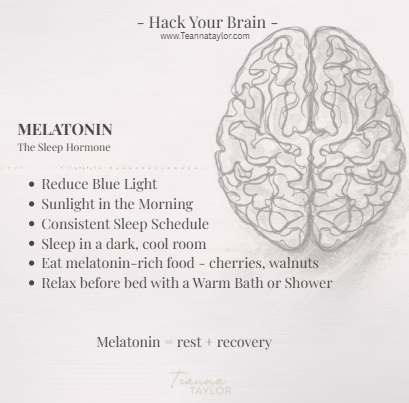
Reduce Blue Light in the Evening
The blue light from phones, TVs, and computers suppresses melatonin production, tricking your brain into thinking it is still daytime.
Turn off screens at least an hour before bed, or use night mode or blue light blocking glasses if needed.
Soft, Warm Lighting
Bright white or blue lighting delays melatonin release, while softer tones support it.
Switch to dim lighting, candles, or warm lamps in the evening to signal that it is time to wind down.
Get Morning Sunlight
Exposure to natural light within the first hour of waking helps regulate your circadian rhythm
Even 10 to 30 minutes of daylight can support melatonin production later that evening.
Keep a Consistent Sleep Rhythm
Going to bed and waking at the same time each day helps train your body to release melatonin naturally.
Irregular sleep patterns confuse your internal clock and disrupt your ability to rest.
Create a Wind-Down Ritual
Simple, repeated actions before bed signal safety and predictability.Reading, journaling, meditation, or gentle stretching can help your body transition out of alertness.
Use Temperature to Your Advantage
A warm bath or shower before bed helps your body cool down afterwards, which naturally triggers melatonin release.
Adding magnesium (such as Epsom salts) can deepen relaxation.
Optimise Your Sleep Environment
Melatonin increases in darkness and cooler temperatures.
Keep your room dark and cool (around 16–19°C) to support deeper sleep.
Support Through Nutrition
Certain foods naturally support melatonin production, including:
Cherries
Bananas
Nuts (walnuts, almonds)
Oats and rice
Turkey
Herbal teas (chamomile, valerian, passionflower)
Gentle Nervous System Regulation
Breathwork, calm music, or white noise can help your system settle
Even simple breathing patterns can begin to shift your state.
What Disrupts Melatonin (Important Awareness)
To support sleep, it is equally important to reduce what interferes with it:
Blue light exposure before bed
Irregular sleep schedules
Artificial light at night
Caffeine (especially after 2pm)
Alcohol (disrupts REM sleep)
Heavy meals late at night
High stress and overstimulation
Lack of daylight during the day
Noisy or bright sleep environments
Over-reliance on sleep medication
Optional Support (If Needed)
If additional support is required:
Magnesium can help relax the body
L-theanine supports calm without drowsiness
Melatonin supplements may help short-term
Always use gently and intentionally
The Deeper Truth
You do not need to force yourself to sleep. You need to create an environment where your body feels safe enough to let go. And when you begin to do this, even in small ways, sleep becomes something that arises naturally, rather than something you chase.
The Method Behind This
This is why real change is not about controlling your body, but about understanding it.
Because when your system feels supported, it begins to restore. And when it restores, everything else becomes easier.
If this resonates, and you are ready to work with your nervous system, your natural rhythms, and your ability to rest and restore, this is exactly what I guide through my workbooks, workshops, and retreats.
A structured, yet deeply personal way of creating change that your system can follow.


Comments